Strategies for Internationalizing the Renminbi by Yuanzheng Cao
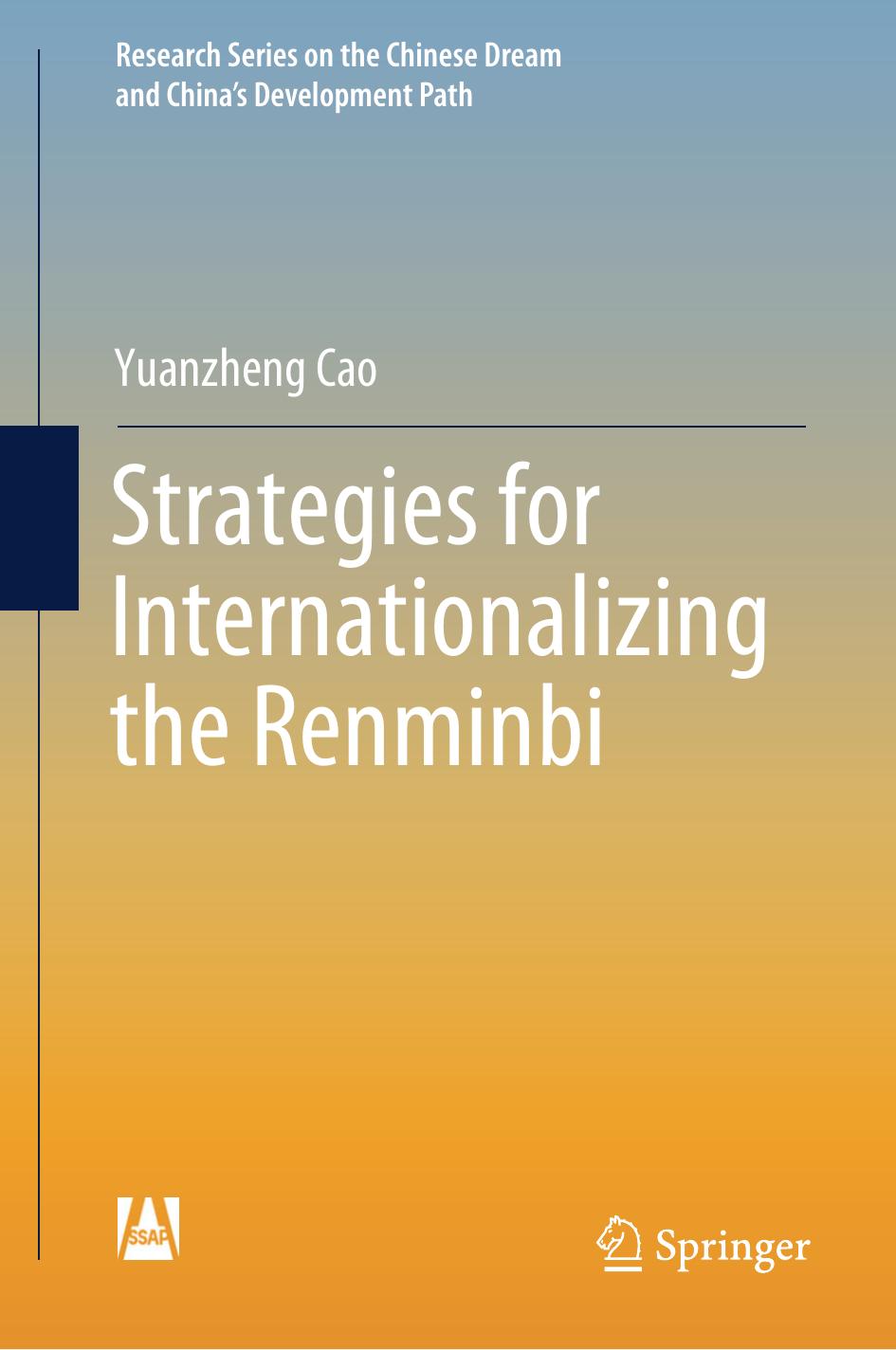
Author:Yuanzheng Cao
Language: eng
Format: epub, pdf
ISBN: 9789811308000
Publisher: Springer Singapore
Time
1970–1974
1975–1979
1980–1984
1984–1989
1970–1989
Japan
10.7
7.5
3.9
1.2
5.8
Germany
5.6
4.2
4.5
1.3
3.9
Unit %
Also differently from Japan, the monetary policy of Germany foregrounded the equilibrium of the domestic economy as its primary goal. As such, the issue of the exchange rate took a backseat to the issue of inflation. With this monetary policy, the German economy was able to rid itself of the pressure of imported inflation and to achieve a rapid growth. For a long time, CPI had been regarded by the central bank of Germany as the foundation of the monetary issuance mechanism. Germany once strictly controlled the monetary credit loans as long as the monetary base did not register a large growth. For example, from the 1950s to the 1980s, the inflation rate of Germany held steady at around 37%. Even after the 1985 Plaza Accord, when Germany should have mitigated the contractionary effect brought by the domestic currency appreciation to the domestic economy, the country continued to expand its currency issuance. The central bank continuously cut the discount rate, from 45% in July 1985 to 25% in December 1987. As Germany’s prices rebounded and its economic growth accelerated, however, the central bank of Germany adjusted its monetary policy and began to adopt a tight monetary policy to stabilize the rate of inflation. In July 1988, the central bank of Germany also raised the discount rate. By April 1989, the discount rate had reached a level of 4.5% and continued increasing until September 1992. The reunification of West and East Germany in the early 1990s decelerated the overall growth of the country; in order to boost the economy, at the end of 1992, Germany entered into a stage in which a moderately expansionary monetary policy was adopted. Such a policy not only buoyed the economy, but also controlled the rate of inflation within an acceptable range. From the above explanation, it can be seen that the monetary policy of Germany always put anti-inflation as its priority. The openness of the exchange rate and that of the capital account were always subject to the principle of maintaining the independence of this monetary policy. As a result, Germany’s domestic economy was always stable, which laid a foundation for the internationalization of the Deutschmark.
Let us look, then, to the developing countries. As previously mentioned, after WWII, developing countries had a fundamental need to achieve rapid economic growth through industrialization, yet this required an as-yet unproposed series of policies and systemic arrangements (including finance) for accelerating the formation of capital. The central aim of these arrangements was to foster a distorted market. When this goal was reflected in the foreign exchange system, foreign currencies would be overvalued while domestic currency would be undervalued. Furthermore, the country pursuing such a goal would adopt various measures to consolidate the distorted exchange rate, which would then be developed into a stable and long-term situation. It should be pointed out that under the Bretton Woods system, due to restrictions from the inherent regulations of the international monetary system, any and all efforts put forward by developing countries had the potential to be effective.
Download
Strategies for Internationalizing the Renminbi by Yuanzheng Cao.pdf
This site does not store any files on its server. We only index and link to content provided by other sites. Please contact the content providers to delete copyright contents if any and email us, we'll remove relevant links or contents immediately.
International Integration of the Brazilian Economy by Elias C. Grivoyannis(111322)
The Radium Girls by Kate Moore(12096)
Turbulence by E. J. Noyes(8121)
Nudge - Improving Decisions about Health, Wealth, and Happiness by Thaler Sunstein(7760)
The Black Swan by Nassim Nicholas Taleb(7200)
Rich Dad Poor Dad by Robert T. Kiyosaki(6728)
Pioneering Portfolio Management by David F. Swensen(6342)
Man-made Catastrophes and Risk Information Concealment by Dmitry Chernov & Didier Sornette(6141)
Zero to One by Peter Thiel(5873)
Secrecy World by Jake Bernstein(4804)
Millionaire: The Philanderer, Gambler, and Duelist Who Invented Modern Finance by Janet Gleeson(4539)
The Age of Surveillance Capitalism by Shoshana Zuboff(4355)
Skin in the Game by Nassim Nicholas Taleb(4309)
The Money Culture by Michael Lewis(4268)
Bullshit Jobs by David Graeber(4252)
Skin in the Game: Hidden Asymmetries in Daily Life by Nassim Nicholas Taleb(4052)
The Dhandho Investor by Mohnish Pabrai(3826)
The Wisdom of Finance by Mihir Desai(3792)
Blockchain Basics by Daniel Drescher(3641)
